
Perspective 03 · A market briefing
The money is
already moving.
Changing who carries risk and who receives revenue can change what happens on the land—and what reaches the people downstream.
TerraValue / 22 October 2026 / 10 min read
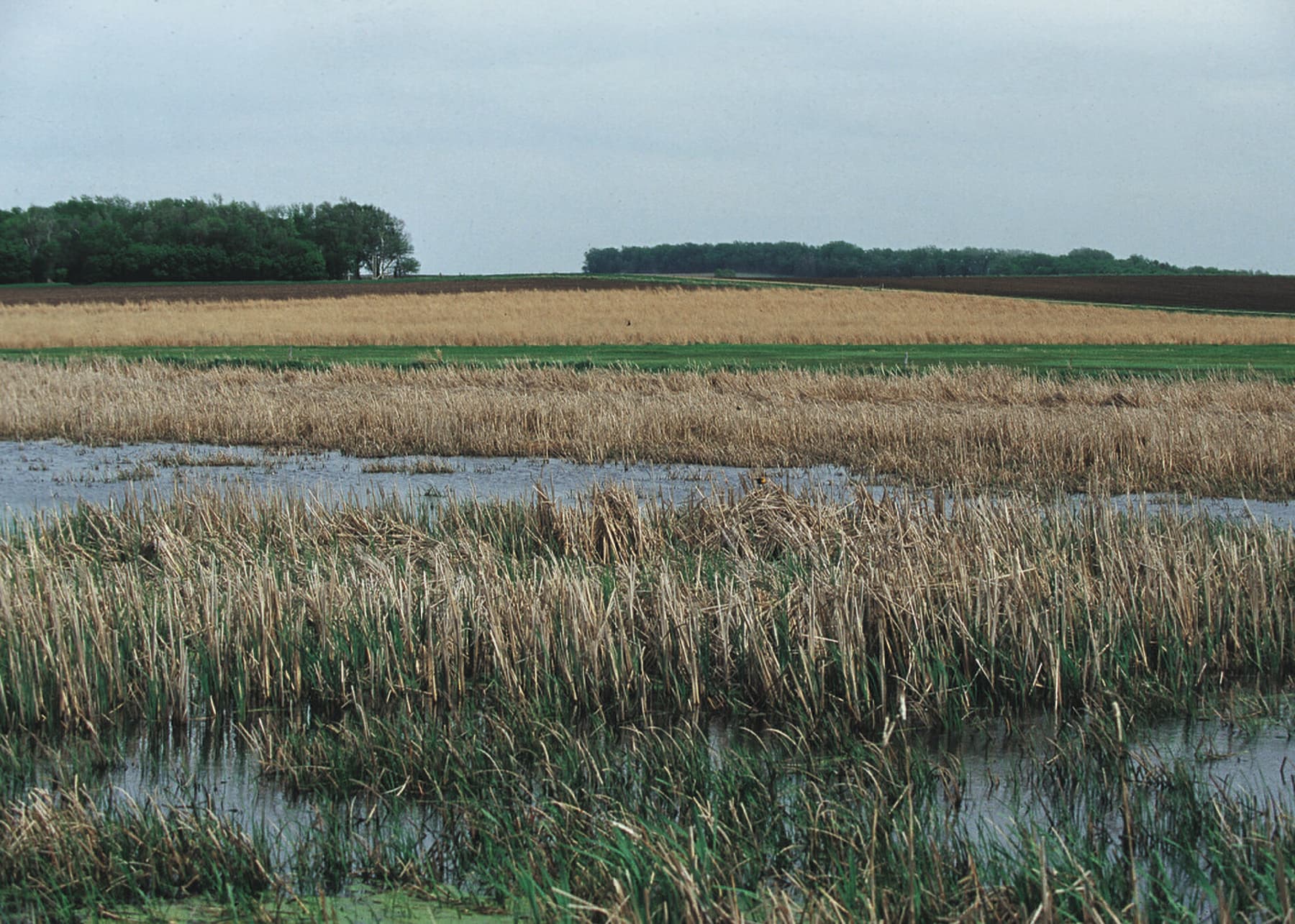
Better agreements can change what happens downstream.
A farmer can see the reason to change a practice and still be unable to carry its first cost, uncertain crop effect and uncertain payment. Downstream, a community may keep paying to manage a problem whose source lies partly upstream.
Restructuring that relationship can do more than reduce a bill. Earlier funding can make work feasible. A dependable revenue term can support its continuation. A defined downside can make a transition assessable. Together, those terms can change the decisions that shape water, soil, habitat and the atmosphere.
Our first two working papers set out the ecosystem dividend and the coalition that could fund it. This market perspective follows the next connection: how could a better financial arrangement produce a better physical future?
01Change the decision that changes the field
An environmental result needs a workable route through someone’s budget.
A useful agreement connects four things: the terms a steward can accept, a locally appropriate management decision, a physical effect, and a benefit that reaches someone. Each link needs its own evidence. Moving a financial risk to another balance sheet changes who bears it; reducing an environmental risk requires the management change to work.
01
A workable agreement
Cash timing, revenue, responsibilities and rights.
02
A feasible decision
A practice the steward can implement and maintain.
03
A physical change
What stays, moves, is consumed or returns to the air.
04
A result people use
A benefit at the relevant place, with accepted evidence.
02Start with dollars we can inspect
An expense, a buyer’s budget and a farmer’s net income answer different questions.
USDA’s September forecast puts 2026 farm production expenses at $492.8 billion. That establishes economic scale, while a field-level opportunity depends on the costs and choices an operator can actually change. USDA ERS · farm income forecast, 3 September 2026 ↗.
A local bill is more specific. Central Iowa Water Works reports about $2.2 million in nitrate-removal facility costs for 2025. Some costs support infrastructure that remains necessary; a prospective source-water investment needs its own comparison with the expense it can credibly avoid. Central Iowa Water Works · nitrate facility costs, 12 June 2026 ↗.
Inspect the dollars
Three dollar views. Three different questions.
Each view keeps its own period, population and unit. These figures are not added together.
Reported cost · one facility
$2.2M
CIWW nitrate-removal facility · reported 2025 total
Operations & maintenance$1.6M
Capital costs$0.6M
The reported total comprises about $1.6 million in operations and maintenance and $600,000 in capital costs. A source-water agreement must be compared with costs that can actually change.
The full bill is not an available farm-payment pool. Fixed costs, continuing treatment needs and the timing of source-water response still matter.
Central Iowa Water Works · nitrate facility costs, 12 June 2026 ↗Inspect all three records
| Reference | Amount and unit | Status |
|---|---|---|
| A national expense base | $492.8BU.S. farm production expenses · 2026 forecast | Forecast · nominal U.S. dollars |
| A local treatment bill | $2.2MCIWW nitrate-removal facility · reported 2025 total | Reported cost · one facility |
| A farmer payment | $33per acre · SWOF participating-farmer average, 2024 | Program-reported historical payment |
There is also evidence of money reaching the steward. The Soil and Water Outcomes Fund reports a $33-per-acre average payment to participants in 2024. A case study should go a step further: show the additional work, crop effects, delivery costs and timing beside the receipt. Soil and Water Outcomes Fund · farmer payments and enrollment ↗.
03Restructure the terms before asking for the outcome
The person able to make the change needs a viable way to participate.
A buyer can commit a term. A lender can bridge a credible payment. An eligible public program can support implementation. A donor can finance shared learning or a capped early loss. An insurer can help establish which risks are measurable and insurable. The owner and operator can agree who controls the practice and receives the payment.
These are distinct responsibilities. Loan principal must be repaid. A guarantee can be exhausted. A buyer can require performance. Fair allocation makes those obligations explicit and keeps a community or a farmer from becoming the unacknowledged bearer of everyone else’s uncertainty.
Redesign the agreement
Change the terms that shape the field decision.
Switch each proposed term on or off. The comparison shows who takes responsibility; it does not calculate a probability of success or erase the underlying risk.
Timing
Without an agreed termThe farmer finances the work before an outcome can be accepted.
Selected designAn agreed advance, eligible assistance or a repayable bridge can meet costs when they fall due.
Buyer, eligible sponsor or lender shares the timing burden
Continuity
Without an agreed termThe farmer carries renewal and price uncertainty while deciding whether to maintain the practice.
Selected designNo additional term selected. This responsibility remains unresolved in the proposed agreement.
Performance
Without an agreed termA difficult transition or missed milestone can leave the farmer with the first loss.
Selected designNo additional term selected. This responsibility remains unresolved in the proposed agreement.
Acceptance
Without an agreed termThe farmer can incur the work without knowing whether its evidence or claim will be accepted.
Selected designBuyers and stewards agree the baseline, monitoring, permitted claims, data rights and exceptions up front.
Buyer, steward and reviewer each have explicit duties
What the design can enable
- ↗ Cash available when implementation is due
- ↗ An agreed route from records to an accepted payment
What each term still requires
- Timing: The agreement identifies who advances the cash, what is repayable and the source of repayment.
- Continuity: Payment remains subject to the contract. The buyer takes a commitment; the farmer still has delivery obligations.
- Performance: Protection has a cap, exclusions and a funding source. Agronomic and weather risks remain.
- Acceptance: Verification and delivery work must be funded. Independent review still determines what the evidence supports.
04Follow what happens beyond the contract
Environmental fate is the physical destination of water, nutrients, carbon and soil.
A funded plan still has to work in the landscape. Nutrients can enter crops, soil, water or the air; losses can affect receiving waters. Management and weather govern the routes. An outcome agreement should identify the pathway it intends to change and test for effects elsewhere. EPA · agricultural nutrients, air and downstream water ↗.
For water quantity, withdrawals and consumption need separate accounting. A pumping reduction can have a different implication from a reduction in water consumed, once return flows and other responses are counted. USGS · irrigation withdrawals and consumptive use ↗.
Follow the physical consequence
An agreement changes a decision. Nature takes it from there.
A possible management decision
Nutrient timing, rate, cover and drainage management
01 · Fate and movement
Nitrogen can enter crops and soil, move with runoff or leachate, or be lost to the air. A change should be assessed across those routes.
02 · What people depend on
Source-water quality and nutrient exposure in rivers and receiving waters
03 · Evidence needed
A field nutrient budget, measured or accepted estimates of losses, and the route and time to the relevant receptor.
A smaller root-zone loss does not establish a reduction at a drinking-water intake. Shifting nitrogen into another loss pathway is not the intended result.
EPA · agricultural nutrients, air and downstream water ↗Conceptual pathways, with no quantity or time scale. A contract supports the action; its physical effect and downstream arrival must be established for the place.
Financial continuity can support continued stewardship and monitoring. That matters when a benefit takes time to arrive or depends on maintenance. A credible claim follows the physical evidence through that period, including uncertainty, reversals and any displacement of effects to another place.
05Revenue can give the work a reason to continue
A viable arrangement can reward useful production beyond the harvested crop.
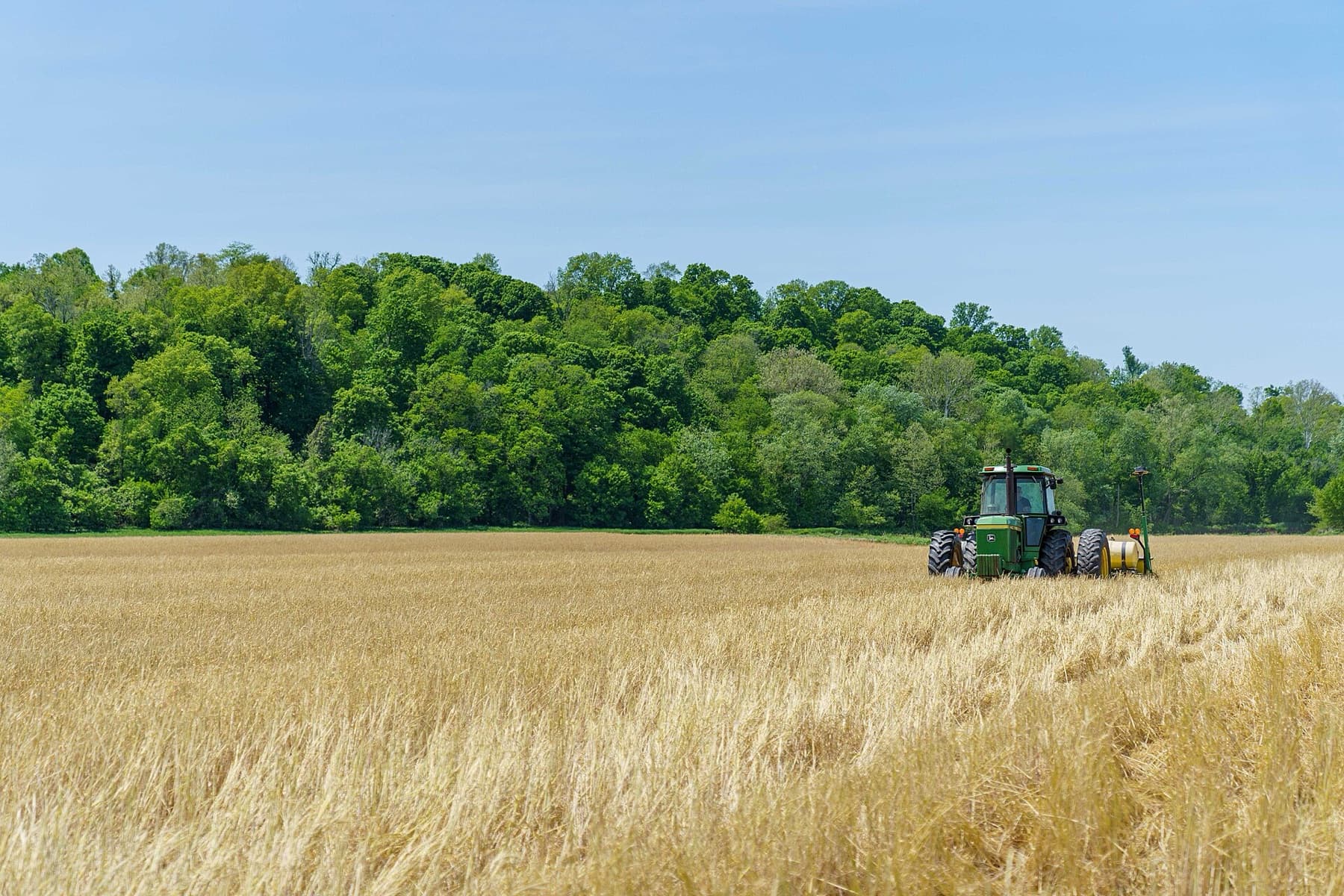
Private savings can improve the farm’s margin. An accepted outcome can support a contracted payment. Appropriate financing can align the calendar. Together, they can make a management plan feasible for longer.
The test is the whole position of the farm: crop income, operating costs, additional work, payment conditions and the downside if a season goes badly.
Some ecological benefits extend to people who cannot buy them. Public purpose belongs alongside private willingness to pay.
A food company may have a reason to invest in its suppliers and in credible evidence for the ingredients it buys. Agricultural climate accounting places conditions on traceability, net emissions and continued monitoring. A commitment to source differently needs that connection to the farm. GHG Protocol · land-sector accounting, monitoring and traceability ↗.
Benefits can also extend beyond one priced outcome. A central Iowa experiment found that prairie strips supported biodiversity and several ecosystem services in a corn–soybean system. Applying that idea elsewhere still requires a local ecological and economic assessment. Schulte et al. (PNAS, 2017) · prairie-strip field experiment ↗.
06The instruments are beginning to connect
Public plans, corporate capital, outcomes contracts and feedstock rules play different roles.
Whole-farm assistance can change how implementation is organized. Blended finance can change who supports its cost. An outcome contract can create a payment route. A policy-linked supply chain can change the value of accepted farm records. Their usefulness depends on the particular operation and agreement.
Inspect a program design
Different instruments can change different constraints.
FY2026 allocation announced
NRCS Regenerative Pilot Program
$700M
announced first-year funding through existing programs
A whole-farm planning approach and a single application, with $400 million through EQIP and $300 million through CSP.
- What it can restructure
- Can put several resource concerns into one conservation plan and combine implementation support with technical assistance.
- The question for a real deal
- Which practices, payment schedule and assessment requirements apply to this operation?
The allocation belongs to EQIP and CSP channels. It is not a separate amount to add to their full budgets, and the announcement does not establish an open FY2027 application or an award to a particular farmer.
USDA NRCS · FY2026 Regenerative Pilot Program ↗Source review: 22 October 2026. These are public program descriptions and dated announcements. Confirm availability, eligibility and offered terms with the relevant institution.
Combining instruments requires checking compatibility and claims. A public implementation payment, a loan and a purchase of an exclusive environmental outcome cannot be treated as interchangeable receipts. The agreement should identify each source, its conditions and what the recipient may claim.
07Success has to reach the people downstream
The ecological and social result is the purpose of the financial design.
The larger opportunity is productive land, dependable livelihoods and an environment that places fewer burdens on others. A useful agreement can reward a steward for a result that reaches beyond the farm boundary, while helping a buyer or public institution meet a specific responsibility.
The design also needs to ask who remains outside it: a tenant with a short lease, a household on a private well, a small utility or a community with little purchasing power. Participation, fair terms and a credible route to public benefit matter alongside the size of a transaction.
Some problems will still need treatment, infrastructure, regulation or different land uses. A stewardship payment should be assessed within that wider response. A community’s safe supply remains necessary while a longer-term benefit develops.
A better agreement matters when it changes what people can do—and what the landscape delivers.
08Make the connection legible enough to act on
From a field estimate to a farm budget, a responsibility and an accepted result.
TerraValue’s field work starts with soil, climate, management and a comparison with a conventional twin. The direction is to connect those estimates to the economic decisions and institutions that could use them: what could change, who would benefit, which terms make participation viable, and what evidence would support payment.
That connection should keep estimates, independently checked outcomes, signed commitments and completed payments distinct. Local agronomy, hydrology, buyer acceptance and program approval each have a role. The platform can help organize a decision without substituting for those responsibilities.
The next useful unit is a real place and a willing steward. Establish the baseline management and farm budget. Identify the physical pathway and a relevant beneficiary. Compare an actionable offer with the farmer’s alternative, including a difficult season. Then follow implementation, the evidence and the payments long enough to learn what actually changed.
Sources and scope
This U.S.-focused market perspective uses public dollar references and conceptual designs. It presents no new calibrated forecast, farmer case study or commercial offer. Program status is dated to the cited source; availability and terms require confirmation. Named institutions are sources and examples, with no TerraValue partnership implied.
- USDA ERS · farm income forecast, 3 September 2026 ↗
- Central Iowa Water Works · nitrate facility costs, 12 June 2026 ↗
- Soil and Water Outcomes Fund · farmer payments and enrollment ↗
- USDA NRCS · FY2026 Regenerative Pilot Program ↗
- Farm Credit · Stewardship Fund announcement, 21 April 2026 ↗
- IRS · Notice 2026-53 announcement, 8 September 2026 ↗
- EPA · agricultural nutrients, air and downstream water ↗
- USGS · irrigation withdrawals and consumptive use ↗
- GHG Protocol · land-sector accounting, monitoring and traceability ↗
- Schulte et al. (PNAS, 2017) · prairie-strip field experiment ↗
Start with a real place
Which decision
could change?
A farm, a receiving water, a buyer’s need or a constraint that deserves a closer look. A useful case starts with the people who know the place.
← All perspectives