
Working Paper 02 · The ecosystem dividend, part II
Who pays for
better land?
One field can create value for a whole community. How could the people who benefit help pay for its stewardship?
TerraValue / 21 October 2026 / 12 min read
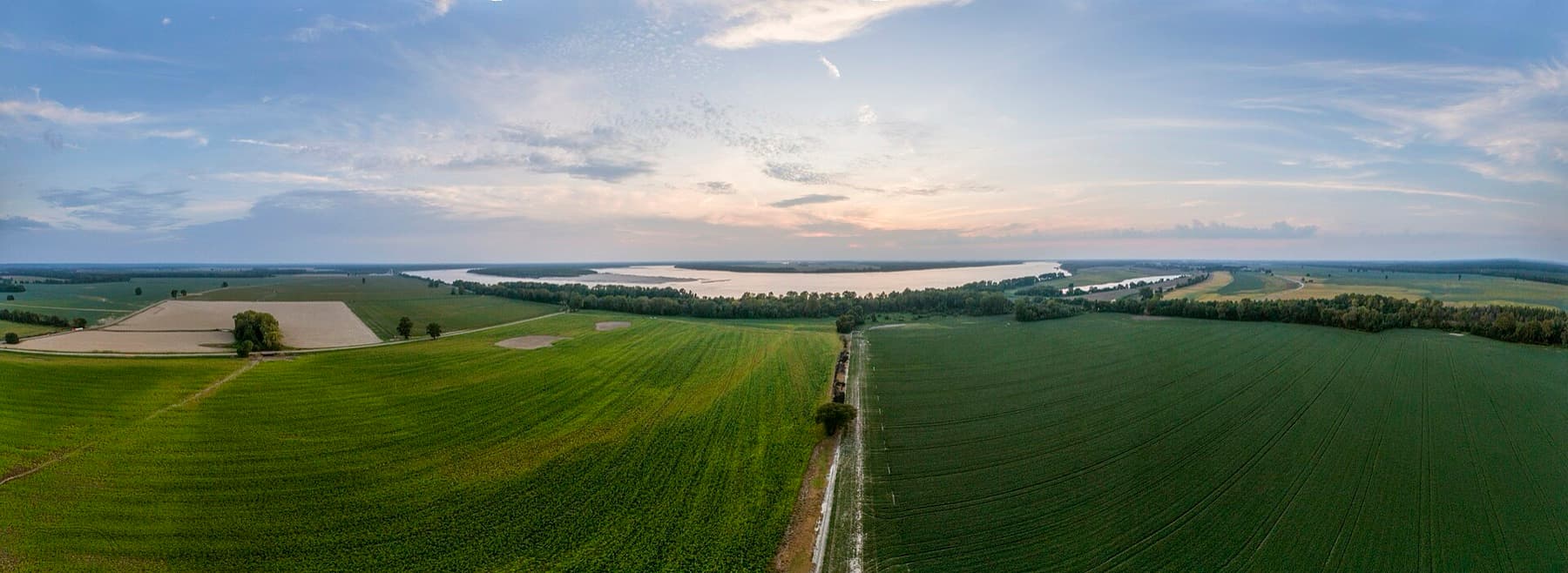
The benefits cross the field boundary.
The bill usually does not.
A farmer plants a cover crop. The seed, the extra fieldwork and the management decisions belong to that farm. The benefits may reach a town’s drinking water, a food company’s supply chain and the landscape that everyone depends on.
That is the coordination problem behind the ecosystem dividend. A field can produce value for several people while the person doing the work carries the first bill. To change the decision on the farm, some of that shared value needs a reliable route back.
Our first working paper introduced a recurring payment for stewardship. This one asks the next question: what would make that payment worth funding, and dependable enough to act on?
01One field, several balance sheets
The ecological connection is real. The financial connection has to be built.
Fewer field passes can save fuel. Better nutrient management can reduce an input bill. Those private savings can reach the farm’s accounts directly, provided the change works agronomically. Cleaner source water or a lower-emissions ingredient is different: the farmer may create it while another institution benefits.
It is tempting to put a price on every benefit and add the numbers together. But a benefit, a budget and a payment are three different things. A utility may value lower nitrogen loading yet still need its treatment plant. A company may want better sourcing evidence yet need to establish which farms supply its ingredients. A bank may like a resilient borrower yet need a contractual source of repayment.
- 01
A benefit
What changed in the field, and who is better off?
- 02
A purchase
What can that beneficiary actually agree to fund?
- 03
A payment
When does the steward receive it, and on what terms?
A useful market connects all three. It needs a named beneficiary, an outcome or service that can be purchased, and an agreement that turns the buyer’s reason to pay into the steward’s ability to plan.
02Who has a reason to join?
Shared land stewardship can serve different institutional purposes.
The strongest coalition gives each participant a decision it can explain to its own board, members or community. The water utility protects a source. The food company works with its supply chain. Public programs pursue public benefit. The lender finances timing. The farmer needs an offer that improves the farm’s position after the work and the uncertainty are counted.
These are possible roles, with conditions attached. Select a participant to see the economic motive, the kind of agreement that might fit, and what would still need to be proved.
Explore the coalition
One field. Different reasons to participate.
An outcome buyer
Water utilities
Less pollution reaching a drinking-water source can reduce treatment expense or protect a source that is becoming harder to use.
How it participates
A targeted source-water agreement, or eligible nutrient reductions under an approved trading program.
What it needs to know
Which fields affect this source, how much arrives, when it arrives, and how prevention compares with the next-best alternative.
The condition: Nitrogen held in a field is not automatically nitrogen removed from a utility’s intake.
Read the public evidence: EPA: how water quality trading works ↗There are precedents for coordination. The Soil and Water Outcomes Fund describes an approach that brings together carbon and water outcomes; ESMC’s Eco-Harvest program also works across multiple environmental outcomes. They demonstrate that this is an operating category, with established experience to learn from. Soil and Water Outcomes Fund: the outcomes approach ↗; ESMC: carbon and water outcomes for farmers ↗.
A coalition does not have to wait until every seat is filled. An initial agreement can begin with a farmer cohort and an anchor buyer whose need, geography and budget fit. Other institutions can join where their contribution has a clear purpose.
03Follow the money
A shared purpose becomes practical through a sequence of specific commitments.
The buyer’s funding has to travel through a delivery process before it becomes income. Farmers need to understand what they are promising and what they receive. Buyers need to know which evidence triggers payment. Everyone needs a way to resolve a shortfall.
A program sponsor might be a district, a fund, a cooperative or another appropriate organization. Its job is to coordinate the agreements and delivery. Evidence services and independent verification have to be funded too. Advance through the sequence below to see where the money, the records and the responsibility move.
Follow the transaction
The money and the evidence move together.
Buyers
Purchase agreed
Program
Terms and rights recorded
Farmer
Offer understood
Evidence
Method agreed
Start with a buyer and a specific purchase.
A water or sourcing buyer agrees what it will buy, the evidence it accepts, the price or budget, and the payment dates. An eligible sponsor brings the contracts together.
A modeled benefit becomes a possible transaction when a named buyer has both a budget and authority to spend it.
Financing can help because the calendar is often the first obstacle. A farmer may buy seed months before a buyer can accept the outcome. A loan can bridge that gap when repayment is credible. Farm Credit’s April 2026 announcement described a planned Stewardship Fund pilot combining corporate zero-interest capital with a Farm Credit loan. That illustrates the financing idea; it does not establish lower credit losses or completed loan performance. Farm Credit: proposed Stewardship Fund, April 2026 ↗.
A donor can play a different role: fund the first shared study, make technical assistance accessible, or protect a clearly defined early risk. That protection has a limit. The coalition still needs a way to pay for recurring stewardship after the initial grant is spent.
04What makes an offer work?
The farmer’s net position is the test.
An attractive headline payment may not cover establishment costs, management time or a crop effect. Equally, private input savings may reduce the amount of external support needed. The offer must be assessed as a change to the whole farm budget.
On the other side, committed buyer funding has to cover both the farmer payment and the work needed to deliver acceptable evidence. Remove a buyer below, raise the cost of delivery, or increase the transition gap. Watch how quickly an apparently promising program can become an offer the farmer should decline.
Try the funding logic
A benefit is useful. A funded offer changes the decision.
A deliberately simple example with 100 budget units. These units explain the mechanism; they are not dollars, market prices or TerraValue’s fees.
Shared delivery work must be paid for.
Costs and crop effects, less private savings.
Committed funding
Where the funding can go
Available to farmer
80
Transition gap
70
Farmer net change
+10
This illustrative offer covers the transition gap and leaves something for the steward.
Inspect the arithmetic
| Line | Units |
|---|---|
| Water buyer | 40 |
| Food buyer | 35 |
| Public assistance | 25 |
| Total committed | 100 |
| Evidence & delivery paid | 20 |
| Farmer payment | 80 |
| Farmer transition gap | 70 |
| Farmer net change | 10 |
Farmer payment = committed funding − funded delivery work. Farmer net change = farmer payment − transition gap. Contributions are assumed compatible; a real program must check rights and eligibility. This example leaves financing, taxes and risk reserves outside its scope.
The same discipline applies to a buyer’s saving. A utility should compare prevention with the cost it can actually avoid. A sourcing buyer should compare equivalent outcomes, evidence quality and reporting use. An insurer needs an actuarial case before a field-level improvement becomes a risk-based price.
The insurance distinction matters. USDA’s conservation guidance addresses compatibility with crop insurance. That does not itself establish a new premium discount. An insurer can help design the evidence well before it becomes a payer for resilience. USDA RMA: conservation and crop insurance ↗.
05Place and time change the value
The field must connect to the beneficiary’s actual problem.
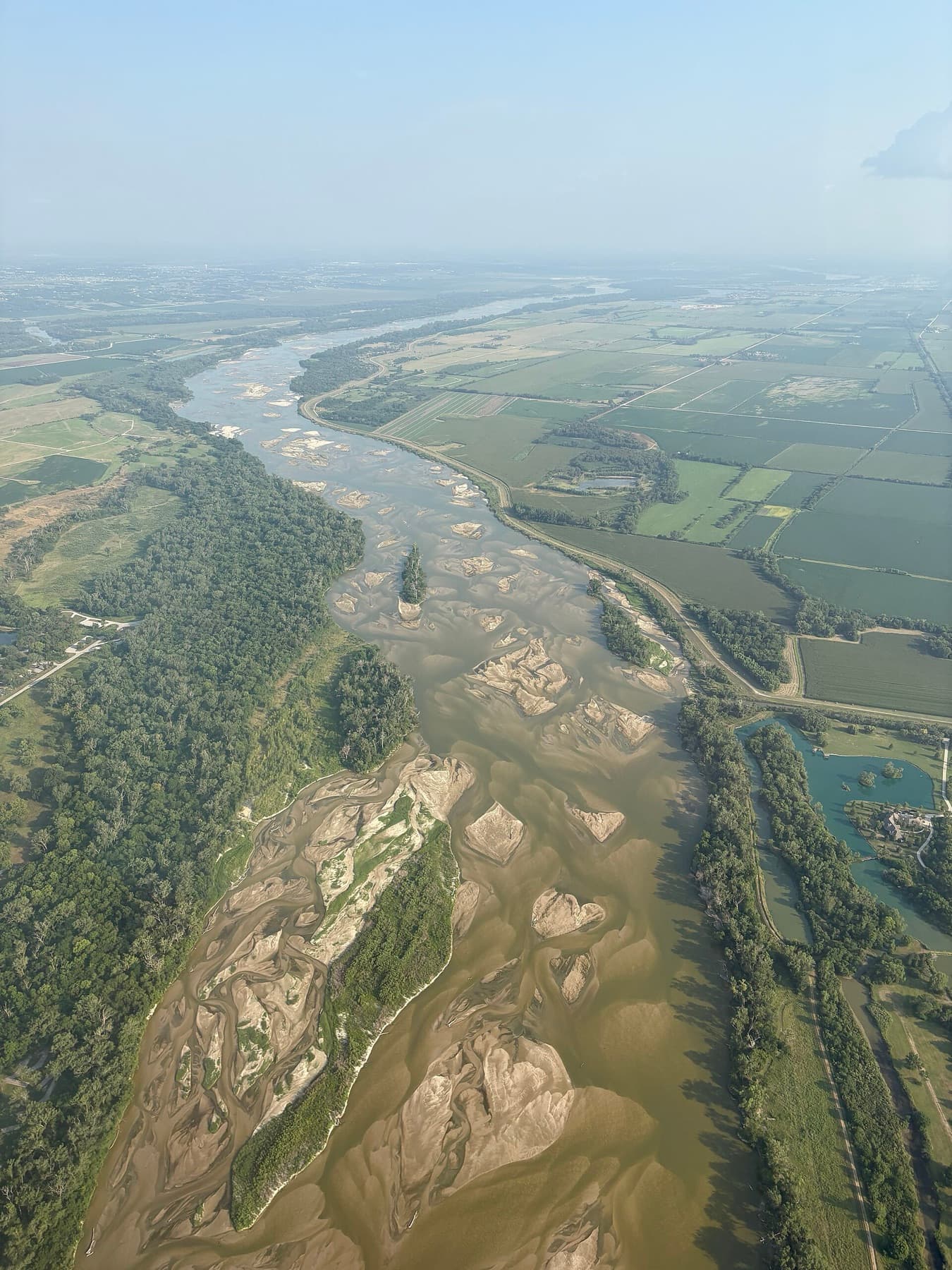
A watershed is a physical relationship. A buyer cannot simply purchase an acre anywhere and assume it protects the water source it uses.
So the useful question is specific: which change on which field can reach this source, in a time frame that matters?
Routing, travel time, legacy pollution, weather and the need for a safe supply all affect the answer.
Even the unit needs care. Nitrogen leaving the root zone differs from nitrogen delivered to an intake. Less pumping differs from less water consumed: return flows and changes in other uses matter. A useful agreement identifies the relevant location, unit and counterfactual before attaching a price. USGS: water consumption and return flows ↗.
Three different clocks
The bill, the evidence and the benefit.
Farmer’s costs
Before or during implementation
Cash is needed while the work is being done.
Accepted evidence
At agreed practice and outcome milestones
The contract defines which evidence can trigger each payment.
Water-source benefit
May unfold over years; local travel time matters
Current management and legacy nitrogen can affect different years of water supply.
Conceptual timing, with no numerical time scale. Payment milestones and source-water response must be set locally. A stewardship agreement cannot substitute for safe drinking water while benefits develop.
The implication is practical. A slow-moving groundwater problem may justify payments for verified management milestones and a longer monitoring commitment. It cannot justify telling a community that a modeled field improvement has already made its drinking water safe.
06Share the work. Define the claim.
One management change can support several outcomes, with careful accounting.
A cover crop can affect water, soil and emissions at once. Coordinating evidence collection can reduce repeated work. Co-funding can spread the cost. But those advantages depend on being precise about what each participant is buying and entitled to report.
A water outcome and an agricultural greenhouse-gas outcome can be distinct. Two buyers purchasing the same exclusive water reduction need an explicit allocation. A processor and a brand need accounting appropriate to their place in a physical supply chain. Corporate inventory reporting and selling a carbon credit have different requirements. GHG Protocol: land-sector accounting and traceability ↗.
Name the outcome
Quantity, place, period, baseline and uncertainty. A field score alone does not issue a credit.
Name the rights
The buyer, the permitted use, other programs and any exclusivity or quantity allocation.
Record the decision
What was estimated, contracted, independently checked, accepted and paid.
Public assistance also has conditions. EPA’s revolving-fund framework includes eligible nonpoint-source projects, but eligibility, the recipient and the financing route still matter. A shared evidence file should help a program follow those rules; it cannot override them. EPA: Clean Water State Revolving Fund ↗.
07The larger purpose is a better place to live
A viable transaction should serve the people and the landscape around it.
The reason to build this institution is bigger than a new environmental asset. It is the possibility of keeping farms productive while rewarding the work that protects water and land, before the downstream bill becomes harder to bear.
Some of the people who benefit have little purchasing power: a household on a private well, a small water system, a tenant with a short lease. Public and philanthropic participation can help a coalition serve them too. Benefit targeting and representation belong in the design, alongside willingness to pay.
Land tenure is part of that design. The 2022 Census reports that 39% of U.S. farmland is rented from others. An operator can bear a transition cost while the landowner controls renewal or rent. Payment rights, practice control and a fair exit need to be understood before the work starts. USDA: 2022 Census of Agriculture, farms and farmland ↗.
Nor is there one agronomic prescription that works everywhere. Large-field research finds mixed effects of cover cropping, with context-dependent yield and weather outcomes. That is a reason for local advice, honest farm budgets and monitoring, rather than a universal promise of higher yields or lower losses. Nature Sustainability (2025): mixed effects of cover cropping ↗.
The first proof is a steward paid on time, a buyer satisfied with what it purchased, and a result the community can trust.
08What TerraValue can connect
The field, the beneficiary and the agreement need to speak the same language.
TerraValue begins with the field: its soil, climate and management, and the physical outcomes a change could produce. Our direction is to connect that evidence to the institutions that could use it, so a promising estimate can be assessed as a practical program.
That means making the questions legible: Where might the benefit arrive? Which buyer has a reason to fund it? What evidence would it accept? Can the full offer improve the farmer’s position? Who carries the uncertainty until the outcome is known?
Parts of that work belong to local advisers, hydrologists, independent verifiers, buyers and public authorities. A useful shared system helps them coordinate. Scientific validation, accepted methods and signed agreements remain necessary.
We would begin with one landscape, a willing group of stewards and one or two buyers with a concrete need. Agree the evidence and payment terms before implementation. Measure the farmer’s net economics and the buyer’s accepted benefit. Learn from the first completed transaction before expanding it.
Sources and scope
This working paper proposes a market design. Its interactive budget is an invented teaching example; the diagrams show possible relationships. No named institution is represented as a TerraValue partner. Public evidence below was reviewed for the October 2026 edition. Program eligibility and accounting requirements should be checked for a specific transaction.
- Soil and Water Outcomes Fund: the outcomes approach ↗
- ESMC: carbon and water outcomes for farmers ↗
- Farm Credit: proposed Stewardship Fund, April 2026 ↗
- EPA: Clean Water State Revolving Fund ↗
- EPA: how water quality trading works ↗
- GHG Protocol: land-sector accounting and traceability ↗
- USDA RMA: conservation and crop insurance ↗
- Nature Sustainability (2025): mixed effects of cover cropping ↗
- USDA: 2022 Census of Agriculture, farms and farmland ↗
- USGS: water consumption and return flows ↗
Build the first connection
Where could this
come together?
A watershed, a farmer network, a sourcing need or an assumption to challenge. The most useful starting point is a specific one.
← All perspectives